
C3 glomerulopathy causes and risk factors
 Fact-checked by
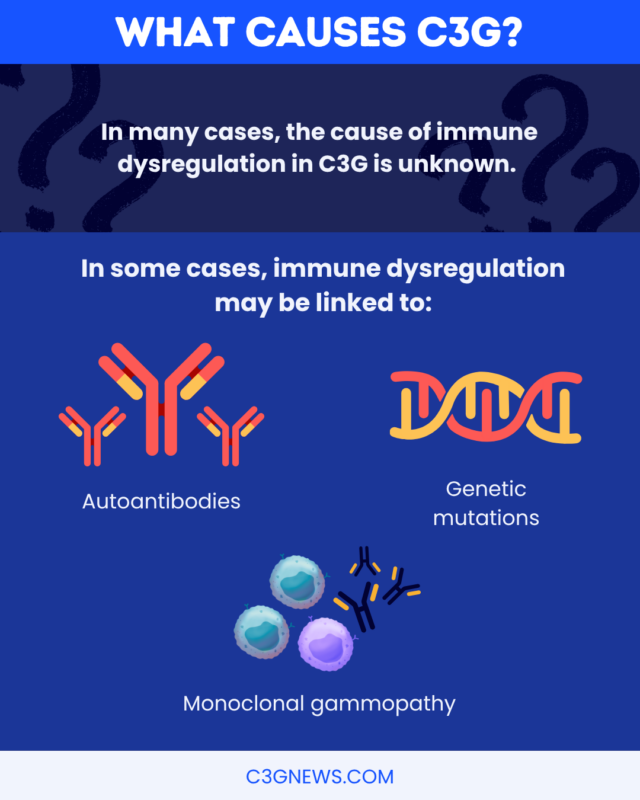
C3 glomerulopathy (C3G) is a rare kidney disease caused by the excessive activity of a part of the immune system called the complement system. While the exact cause of this immune dysregulation is often unknown, it has been linked to genetic mutations, self-reactive antibodies, or other health conditions that influence complement function.
In general, these underlying C3G causes cannot be changed, and there is no way to prevent the disease from developing. Still, knowing what causes C3G can help individuals and families better understand aspects of the disease, such as family risk and treatment options.
Understanding complement system dysregulation
The complement system is a network of more than 50 proteins that help the immune system identify and remove harmful threats to the body, such as infectious agents or damaged cells. C3 is the most abundant complement protein in the blood. When the complement system is activated, an enzyme complex splits, or cleaves, C3 into fragments.
C3G happens when a part of the complement system called the alternative pathway is not properly controlled and becomes overly active, leading to the excessive production of the enzyme complex that cleaves C3. C3 fragments then build up in the tiny filtering units of the kidneys (glomeruli), where they contribute to inflammation and damage. Over time, this damage makes it harder for the kidneys to filter waste from the blood.
Scientists don’t always know exactly why the immune system becomes dysfunctional in C3G, although autoimmune and genetic factors have been linked to the disease. There are two subtypes of C3G — C3 glomerulonephritis and dense deposit disease. While each is associated with a distinct pattern of kidney damage, they are generally thought to have the same underlying immune mechanism.
Autoantibodies
Self-reactive antibodies, or autoantibodies, that interfere with complement regulation are among the most commonly identified drivers of C3G, potentially occurring in more than half of people with the disease, although estimates vary.
The most common type of autoantibody that causes C3G is C3 nephritic factor, which binds to the enzyme complex that cleaves C3, called C3 convertase, stabilizing it, and causing it to work longer than it should. Other autoantibodies can interfere with different proteins that help keep complement activity under control.
Researchers do not know why the body produces these self-reactive antibodies.
Genetic mutations and hereditary risks
There are also possible genetic causes of C3G. About 20% to 25% of people with C3G have one or more detectable mutations in genes that influence the function and regulation of the complement system. Complement-related genes linked to the disease include:
- C3
- CFH
- CFHR 1-5
- CFB
- CFI
While mutations in these genes can increase a person’s risk of developing C3G, their presence doesn’t always lead to the disease, and many people who have these mutations don’t develop the condition.
Most cases of C3G happen randomly in people with no family history of it, but rare cases of familial C3G have been linked to heritable mutations in complement-related genes.
Possible triggers and associated conditions
In some cases, C3G is linked to a condition called monoclonal gammopathy, characterized by the presence of a type of abnormal antibodies in the blood. It’s thought that these antibodies can directly or indirectly activate the complement alternative pathway to drive C3G.
It has been hypothesized that for some people with underlying susceptibility or complement dysregulation, certain triggers may unmask the disease or cause it to worsen, although this is poorly understood. The most well-studied trigger is infection. Scientists think bacteria and viruses can stimulate the immune system and contribute to complement overactivation.
Risk factors and demographics
No lifestyle or environmental C3G risk factors have been definitively linked to the development of the disease.
While the disease can occur at any age, it is most common in children and young adults. It affects males and females equally and can occur in people of any race or ethnicity.
C3G News is strictly a news and information website about the disease. It does not provide medical advice, diagnosis, or treatment. This content is not intended to be a substitute for professional medical advice, diagnosis, or treatment. Always seek the advice of your physician or other qualified health provider with any questions you may have regarding a medical condition. Never disregard professional medical advice or delay in seeking it because of something you have read on this website.