
C3 glomerulopathy overview
 Fact-checked by
C3 glomerulopathy (C3G) is a very rare kidney disease in which the overactivity of a part of the immune system leads to inflammation and damage in the kidney’s tiny filtering units. The main signs and symptoms of C3G are related to progressive kidney dysfunction.
There is no cure for C3G, but treatments to protect the kidneys and control the immune system can help slow disease progression and ease symptoms. The long-term outlook for C3G varies widely, but many people with the disease will experience kidney failure and require a transplant.
Understanding C3G
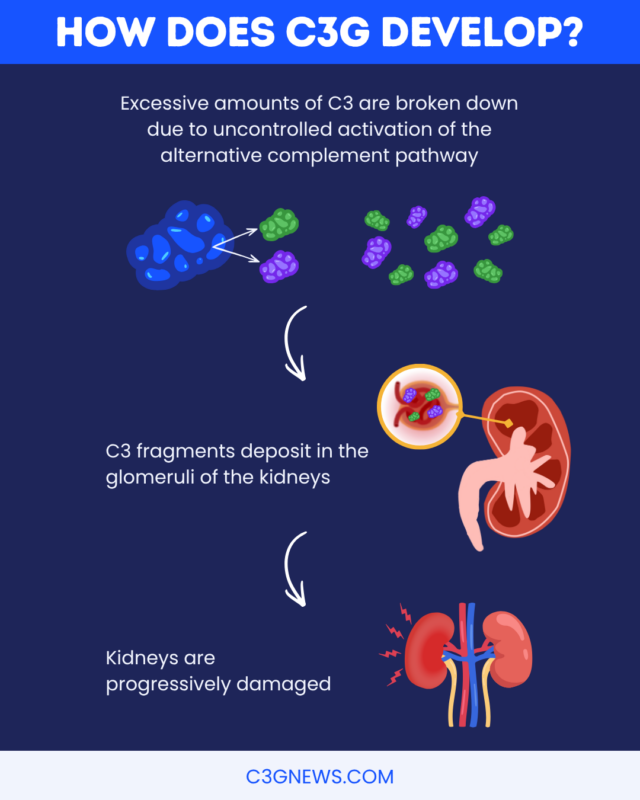
In C3G, a part of the immune system called the alternative complement pathway becomes overactive, often for unknown reasons. Fragments of a complement protein called C3 deposit in the tiny filtering units of the kidneys, called glomeruli. Inflammation and damage from this abnormal immune activity cause progressive kidney dysfunction.
C3G became formally recognized as its own clinical condition in 2013. Before then, many people with the disease would have been diagnosed with membranoproliferative glomerulonephritis, an umbrella term for a larger group of conditions characterized by the buildup of immune deposits in the glomeruli.
Generally, C3G is described as a very rare or ultra-rare disease. It is estimated to affect around 2 to 5 people per million people worldwide.
Types of C3G
There are two main types of C3G: dense deposit disease (DDD) and C3 glomerulonephritis (C3GN). They cause similar symptoms and are treated the same way. The main difference between them is the pattern of C3 deposits and related damage they cause in the kidneys, which is why they can only be distinguished from one another through a microscopic examination of kidney tissue.
- DDD: Characterized by thick, ribbon-like C3 deposits in the kidneys. It is the less common type, and is more likely to be seen in children and young adults.
- C3GN: Characterized by more scattered, ill-defined C3 deposits in the kidneys. It is the more common type, and is more likely to be diagnosed in adults.
There may also be subtle differences in disease presentation between the two disease types. For example, people with DDD are more likely to experience symptoms outside the kidneys, including those affecting the eyes and skin.
Causes and risk factors
C3G is driven by the overactivation of the alternative complement pathway, which ultimately leads to the buildup of C3 fragments in the kidneys. The underlying causes of this immune dysregulation are often unknown, but in some cases, the disease is linked to:
- Genetic mutations: Up to a quarter of people with C3G have mutations in genes that affect complement function or regulation, which could increase the risk of C3G. The disease uncommonly runs in families.
- Autoantibodies: Some people develop self-reactive antibodies that affect the function of regulatory proteins that help control the complement system
- Monoclonal gammopathy: This condition is usually seen in older adults and is characterized by the presence of abnormal antibodies in the blood. These antibodies may directly or indirectly activate the alternative pathway.
C3G can occur at any age, but is most commonly diagnosed in children and young adults. There are no lifestyle factors that have been definitively linked to the development of the disease.
Symptoms and early warning signs
C3G can progress silently, and it may not initially cause symptoms. Early warning signs of a problem with the kidneys can include discolored or foamy urine and high blood pressure.
As damage to the kidneys accumulates, symptoms of C3G may include:
- Pink-, red-, or brown-colored urine due to blood in urine (hematuria)
- Foamy urine due to protein in the urine (proteinuria)
- Peeing less often or in smaller amounts than usual (oliguria)
- Swelling (edema) in the face, hands, feet, or legs
- Fatigue or trouble concentrating
- Gout, a painful condition where a waste product called uric acid accumulates in the joints
Not everyone with C3G experiences all of these symptoms, as they may depend on the degree to which kidney damage accumulates. Some people will only have minor hematuria or proteinuria for many years, while about half will progress to kidney failure within a decade of diagnosis and have more significant symptoms.
C3G symptoms may develop more slowly and silently in adults, while they often come on more suddenly in children.
Some people with C3G develop symptoms outside the kidneys, including:
- Recurrent infections due to immune system dysfunction
- Yellowish deposits of fats and proteins in the back of the eye (drusen)
- Uneven fat distribution under the skin (acquired partial lipodystrophy)
Diagnosis
C3G is definitively diagnosed via a kidney biopsy, where a small piece of kidney tissue is examined under a microscope to identify C3 deposits and related damage in the glomeruli. This helps doctors rule out other kidney diseases that can cause similar symptoms, but have different cellular features. Specialized imaging of the biopsy sample can also help distinguish the two disease types of CG3.
A C3G diagnosis may also be supported by:
- Urine tests: Looking for signs of kidney problems, such as hematuria or proteinuria
- Blood tests: Measuring estimated kidney function
Other tests can help doctors better understand the underlying causes of the disease and nature of complement dysfunction. These include:
- Genetic tests: Looking for genetic mutations linked to complement dysfunction
- Antibody tests: Looking for self-reactive antibodies that interfere with complement function
- Functional complement tests: Measuring the levels and function of proteins in the complement system
Older adults may also be tested for the abnormal proteins that characterize monoclonal gammopathy.
Treatment and management options
C3G cannot be cured, but available treatments can help protect the kidneys and slow disease progression. C3G treatment may involve:
- Supportive care: Standard interventions to protect the kidneys, including medications to control blood pressure and fluid accumulation, as well as a kidney-friendly diet
- Immunosuppressants: Medications to control the abnormal immune activity that’s driving kidney damage
- Kidney transplant: Replaces a failing kidney with a healthy donor kidney
Traditionally, a combination of broad-acting immunosuppressants was used to manage C3G, namely corticosteroids plus mycophenolate mofetil. More recently, targeted complement inhibitors have been approved for the disease. These medications more specifically address the underlying cause of kidney damage in C3G — complement dysfunction. Complement inhibitors approved for C3G in the U.S. include:
- Empaveli (pegcetacoplan): Injectable therapy approved for adults and children, ages 12 and older
- Fabhalta (iptacopan): Oral therapy approved for adults
A kidney transplant may be needed to support survival when the kidneys fail. This is not a cure for C3G, however. The disease can recur in the transplanted kidneys and require additional courses of medication.
Prognosis and long-term outlook
The long-term outlook for this complement system kidney disease can vary widely, and there is no way to easily predict C3G life expectancy.
C3G is progressive, meaning it generally gets worse over time. However, the rate at which this happens is not the same for everyone. For some people, kidney problems progress very slowly over many years, and they may be able to maintain kidney function and avoid complications over the long term.
However, about half of people with C3G develop kidney failure in the decade after their diagnosis, which is life-threatening. These people may need a kidney transplant to survive, however, the disease can recur in the transplanted kidney.
Targeted complement inhibitor therapies for C3G have only become available in the last few years. The overall outlook for C3G may start to be better as these treatments are more widely used, although data is still being collected.
C3G News is strictly a news and information website about the disease. It does not provide medical advice, diagnosis, or treatment. This content is not intended to be a substitute for professional medical advice, diagnosis, or treatment. Always seek the advice of your physician or other qualified health provider with any questions you may have regarding a medical condition. Never disregard professional medical advice or delay in seeking it because of something you have read on this website.